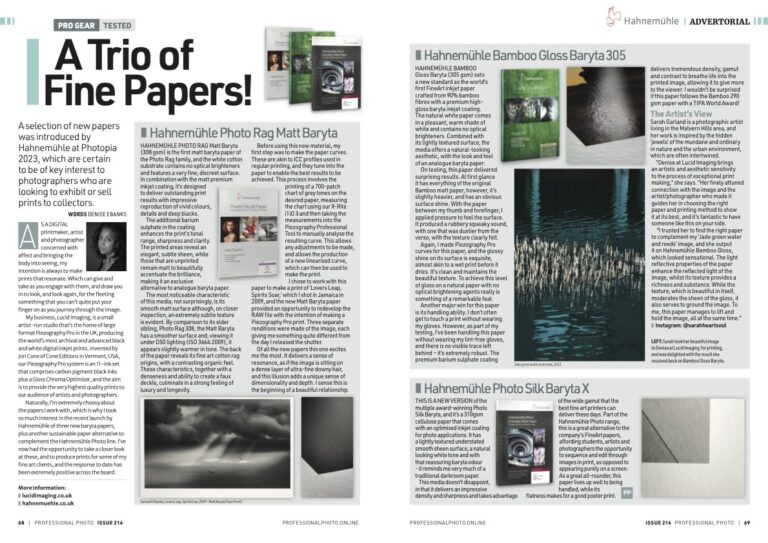
As a Hahnemühle Certified Studio Gold partner, of course I agreed to make a Hahnemühle fine art paper review to feature in Professional Photographer magazine. Following on from 3 Exciting New Hahnemühle Papers You Need to Know About, this is what I had to say…
Hahnemühle fine art paper review
Hahnemühle Photo Rag® Matt Baryta
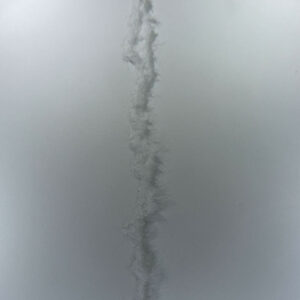
The foremost noticeable characteristic of the Hahnemühle Photo Rag® Matt Baryta paper is naturally its smooth matt surface, although upon closer inspection an extremely subtle texture is evident. In comparison to its elder sibling Photo Rag® 308, the Matt Baryta has a smoother surface, and viewing under D50 lighting (ISO 3664:2009) appears slightly warmer in tone.
The paper has a light dusty feel (and sound), similar to skin primed with a pore-reducing mattifier – makeup artists know all about the power of smoothing out distractions. The back of the paper reveals its fine art cotton rag origins with a contrasting organic feel. These characteristics together with a denseness and ability to create a faux deckle culminate in a strong feeling of luxury and longevity.
As a digital printmaker, artist and photographer who is concerned with affect and bringing the body into seeing, my intention is to make prints that resonate, a print that gives and takes as you engage with it, a print that draws you in to look (and look again) for the fleeting something that you cannot quite put your finger on as you journey through the print.
Lucid Imaging are the home of large format Piezography® Pro in the UK, producing the world’s most archival and advanced black and white digital inkjet prints, unfortunately still often referred to as Giclée prints. Invented by Jon Cone of Cone Editions in Vermont, USA, our Piezography® Pro system is an 11 ink set comprising all carbon pigment black inks and a Gloss Chroma Optimiser.
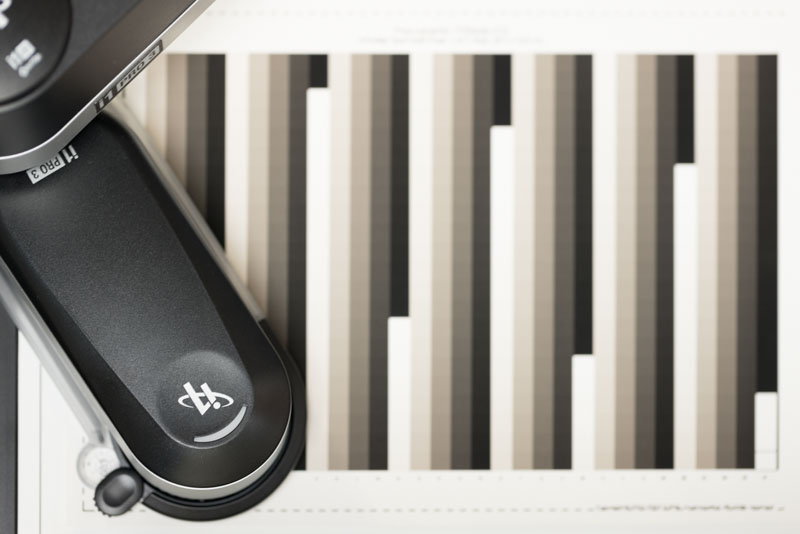
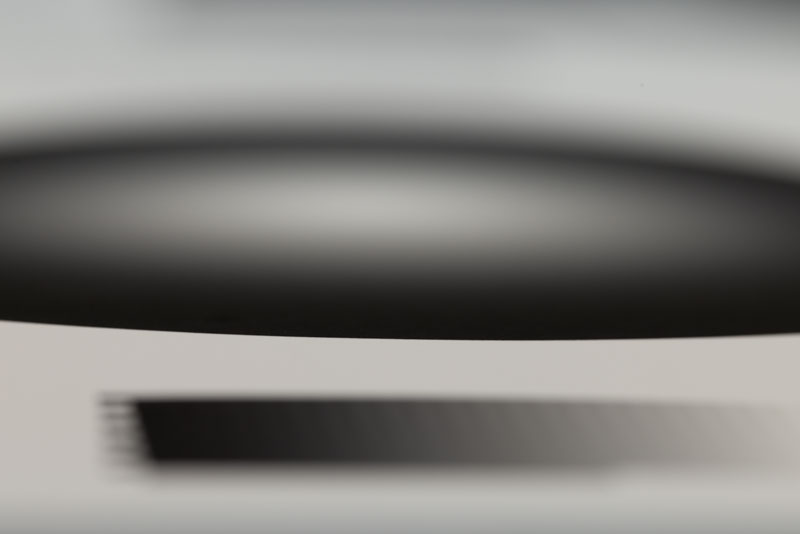
Piezography® Pro test print.
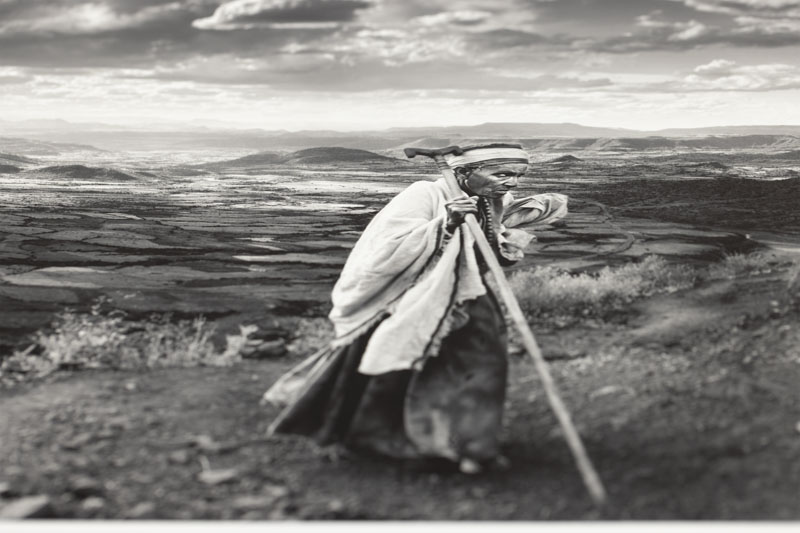
The first step in making the print of Pilgrim walking to the holy Christian town of Lalibela, Ethiopia, 2006 by photographer Steve Bloom on photo rag Matt Baryta, was to make the paper curves – curves are akin to icc profiles used in regular print, tuned to the paper for best results. This process involved printing a 700-patch chart of grey tones on the desired paper, measuring the chart using our x-rite iO3, taking the measurements into the Piezography® Professional Tool and manually analysing the resulting curve, making any adjustments and producing a new linearised curve from which to print.
Using the existing split tone for Steve Bloom’s image (yes, Piezography® Pro allows for split toning between warm, neutral and cool in the highlights, midtones and shadows, producing 1 million tones in a single image and resulting in a print on paper where there is no paper white left, save for specular highlights) I proceeded to make an A2 print on the Matt Baryta paper.
Transfixed by the print with its beckoning tactility under D50 lights, my mind shifted between looking technically and appreciating in awe the fine print that set goosebumps erupting over my arms. The density was incredible, yet still possessing detail. The paper offered up the printed image in a way I hadn’t see it before (and I have printed it on different papers and tones). Clearly this paper excites me the most, as moving around the print gives and takes a bit more – it delivers a sense of resonance, as if the image sits on a dense layer of ultra fine short lanugo. This illusion gives the print a unique dimensionality and depth.
There is a dualism present, where the print becomes an object, yet the paper intermittently disappears as it presents the print – a silent, persistent yet periodically unseen advocate. The paper has wedded with the image, in this case encouraging a personal journey through the print where confabulations are made of memories provided by the print. We can discuss the paper, however, the true experience resides in the physicality, tactility and presence of the embrace between the image and paper with an archivability that will outlast us – words simply cannot do it justice.
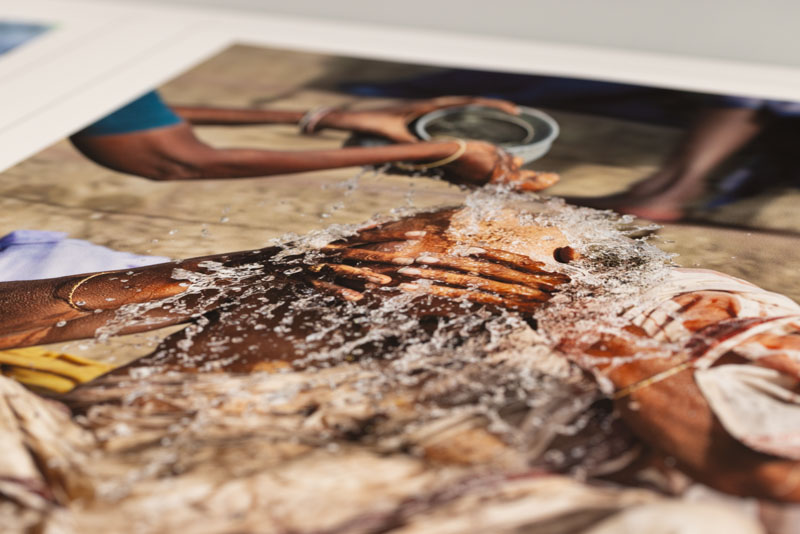
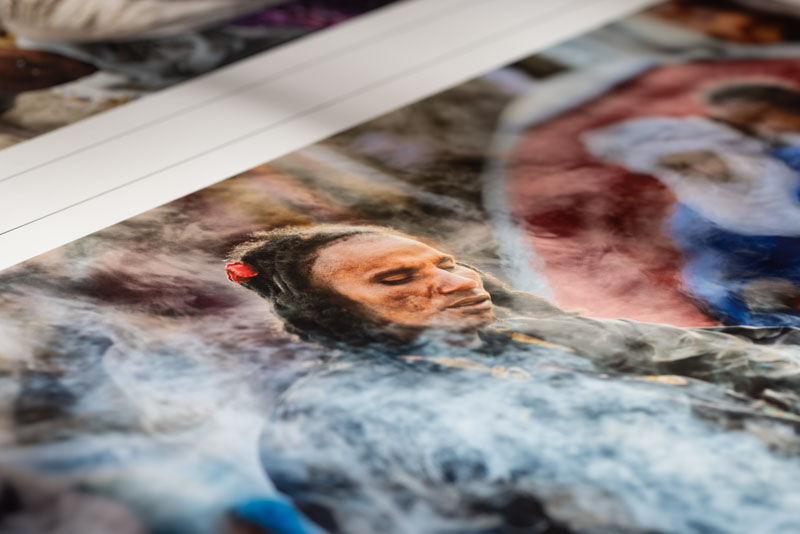
Piezography® Pro
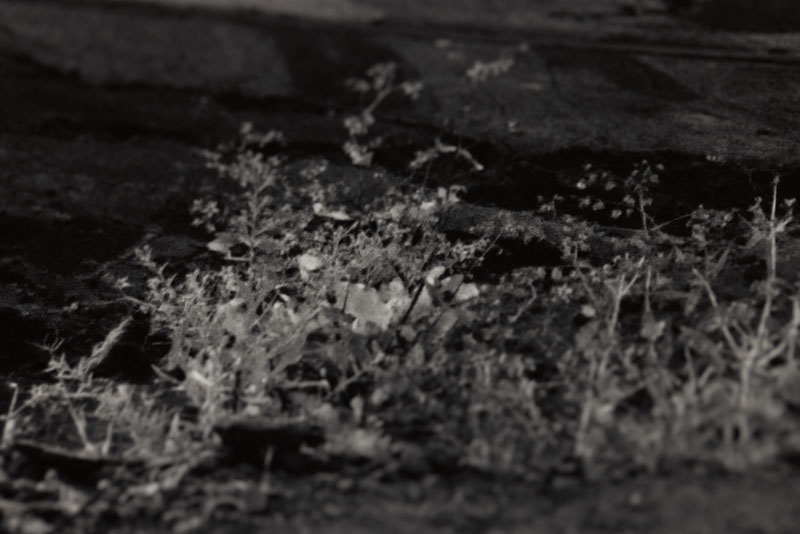
Piezography® Pro shrub detail
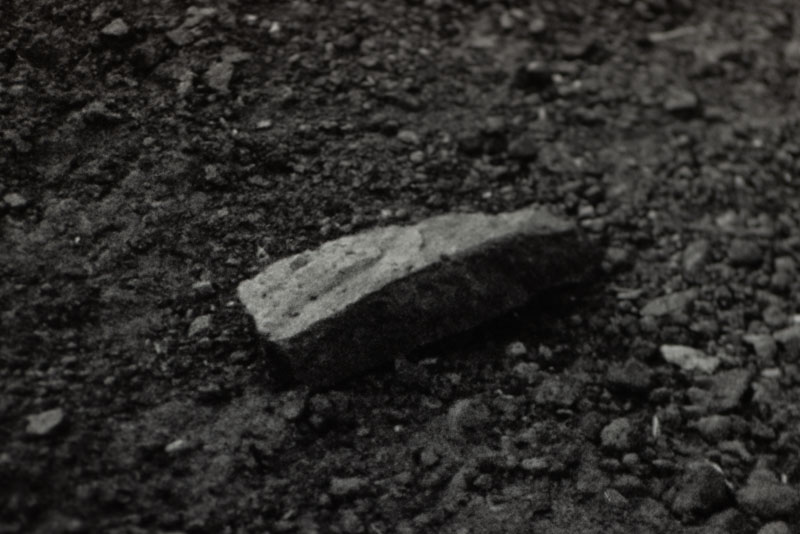
Piezography® Pro ground detail
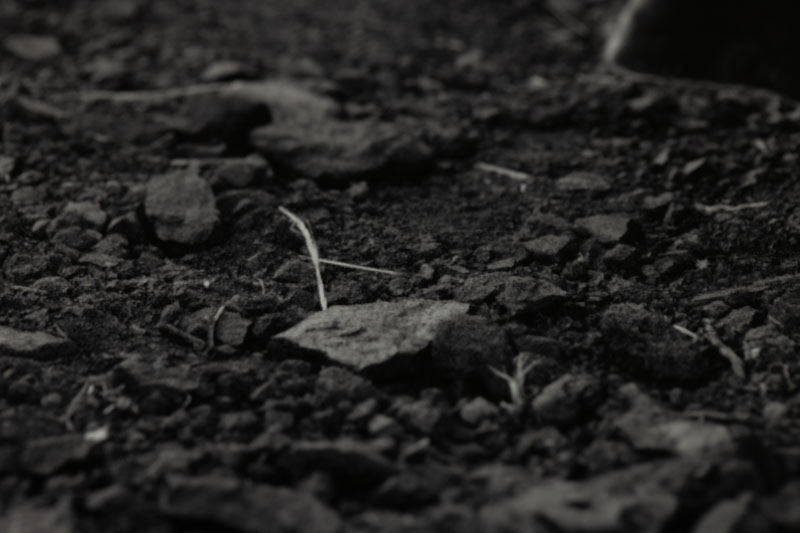
Piezography® Pro ground detail
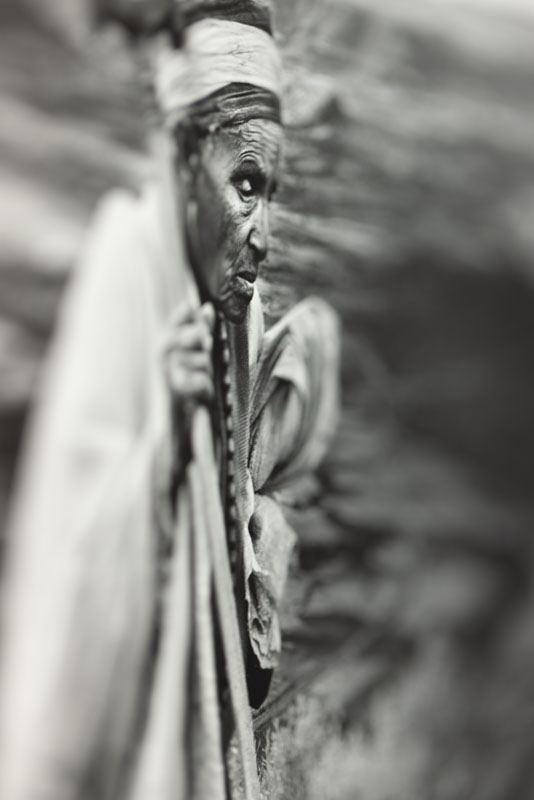
Piezography® Pro portrait detail
Wide-gamut colour archival pigment prints and Piezography® Pro archival carbon pigment split-toned print on Hahnemühle Photo Rag® Matt Baryta 308 gsm paper.
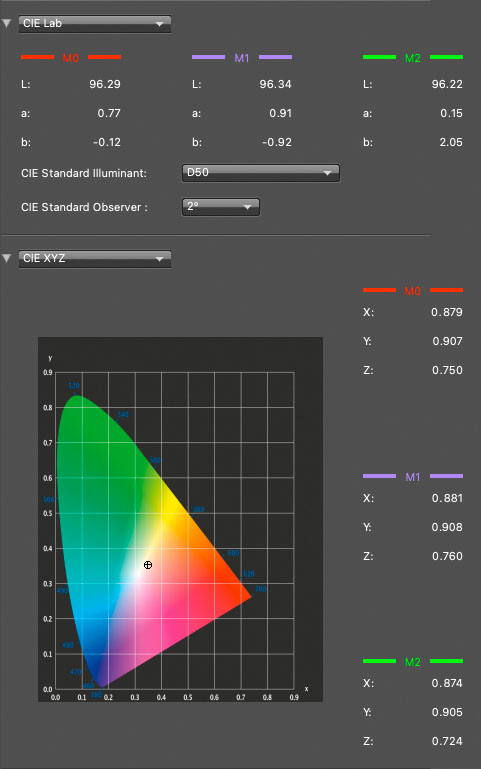
After seeing the exceptional print results on Matt Baryta, and the qualitative assessment complete, curiosity got the better of me for some quantitive data. Using the X-Rite i1Photo Pro 3 spectrophotometer with i1 Profiler software, I measured the Lab Colour Space under the M0, M1 and M2 Measurement Illumination Conditions; the Matt Baryta delivered an even L value of 96.52 across M0, M1 and M2, which comes in higher, thus brighter than Photo Rag® 308 (96.29, 96.34 and 96.22 respectively). The a* and b* figures remain within +/- 0.04 across the measurement. [22/12/2023 19:02 Updated to add: The Photo Rag® 308 has a 92.5% whiteness and Photo Rag® Matt Baryta 88.6% whiteness under Hahnemühle D65 2° 460 nm test conditions.]

The image ‘Lovers Leap, Spirits Soar, 2009’ was made in Jamaica, WI. The new Matt Baryta paper provided an opportunity to redevelop the RAW file with the intention of making a Piezography® Pro print. I created three different renditions of the image, each giving something from the day I released the shutter in 2009. The proof is in the print and this paper possesses a contrasting effect of getting out of the way to present the printed image while elevating the image on its soft velvety surface.
The feeling was clear for my intention for the print, however, viewing the print provided the words to articulate it: to possess an elegant tension within the frame. The paper was able to deliver all the tones Piezography® Pro had to offer.
To fine tune a print is to make the print, review, adjust and print again ‘to the point where it’s supreme’ (Roy DeCarava) – this is the beginning of a beautiful relationship with this paper.
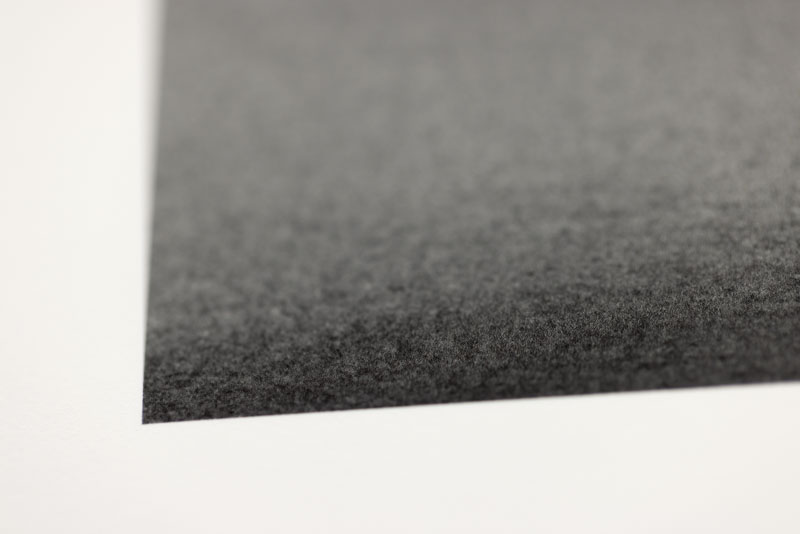
Hahnemühle Photo Rag Matt Baryta Piezography® Pro detail print 1.
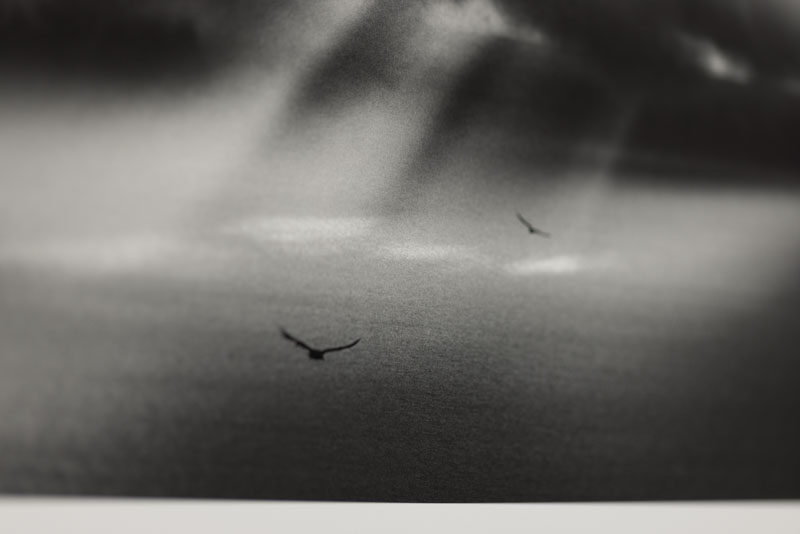
Hahnemühle Photo Rag Matt Baryta Piezography® Pro detail print 2.
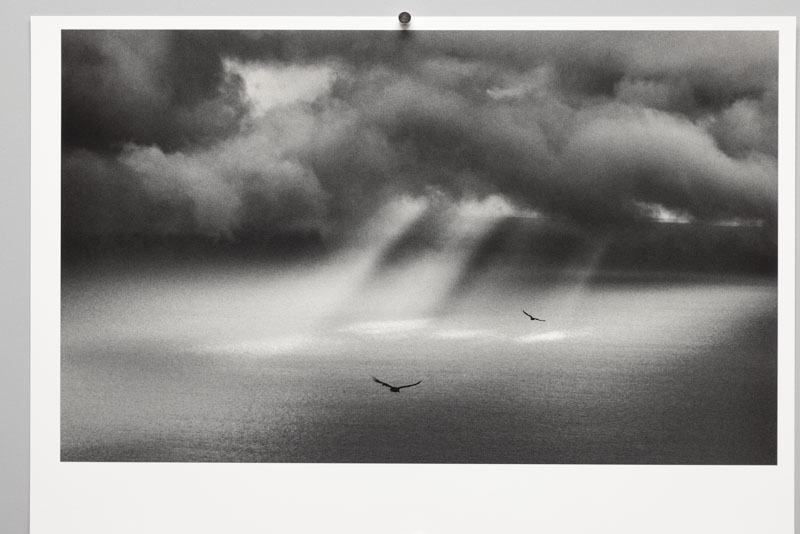
Hahnemühle Photo Rag Matt Baryta Piezography® Pro print 1.
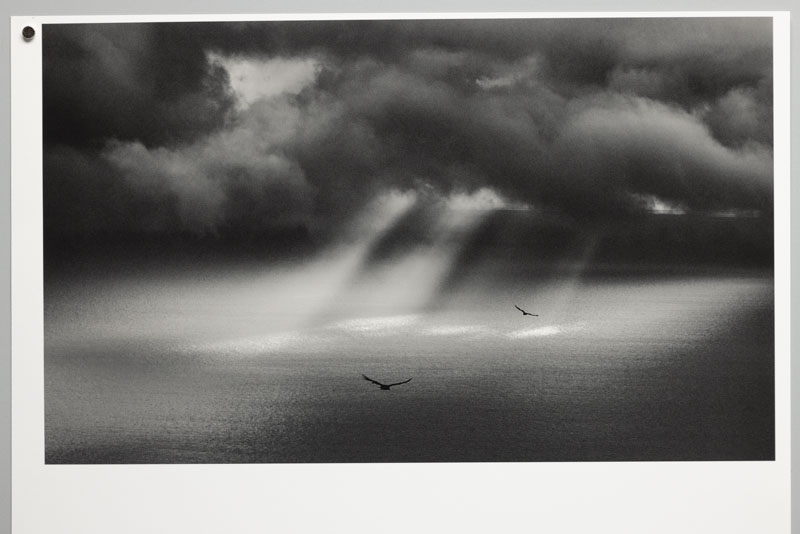
Hahnemühle Photo Rag Matt Baryta Piezography® Pro print 2.

Hahnemühle Photo Rag Matt Baryta Piezography® Pro print 3.
Piezography® Pro archival carbon pigment split-toned print on Hahnemühle Photo Rag Matt Baryta 308 gsm paper.
Hahnemühle Bamboo Gloss Baryta 305
The Bamboo Gloss Baryta delivered surprising results. At first glance it has everything of the original Bamboo matt paper, however, is slightly heavier and has an obvious surface shine. With the paper between my thumb and forefinger, I apply pressure to feel the surface. It produces a rubbery squeaky sound from the surface and a dusty sound from the verso with the texture clearly felt.
Looking at the printed surface is where I was blown away. Again, I made Piezography® Pro curves for this paper and the glossy shine on this paper is exquisite akin to a wet print before it dries – it is clean and maintains the beautiful texture. To achieve this level of gloss on a natural paper with no optical brightening agents (OBAs) is remarkable.
Another major win for this paper is handling ability – I don’t often get to touch the print without my gloves, however, as part of the testing, I have been handling this paper without gloves and there is no visible trace left behind – it is extremely robust. The premium barium sulphate coating delivers tremendous density, gamut and contrast to breath life into the printed image allowing it to give more to the viewer. I wouldn’t be surprised if this paper follows the Bamboo 290 gsm paper with a TIPA World Award!
Images that lend themselves to the paper’s natural nature, warm tone, striking gloss surface, high density and contrast, or wide gamut, such as Jade green water and reeds by artist, Sarah Garland. Whereas, I have previously made Pink wavy window bars by the same artist on the original matt Bamboo paper.
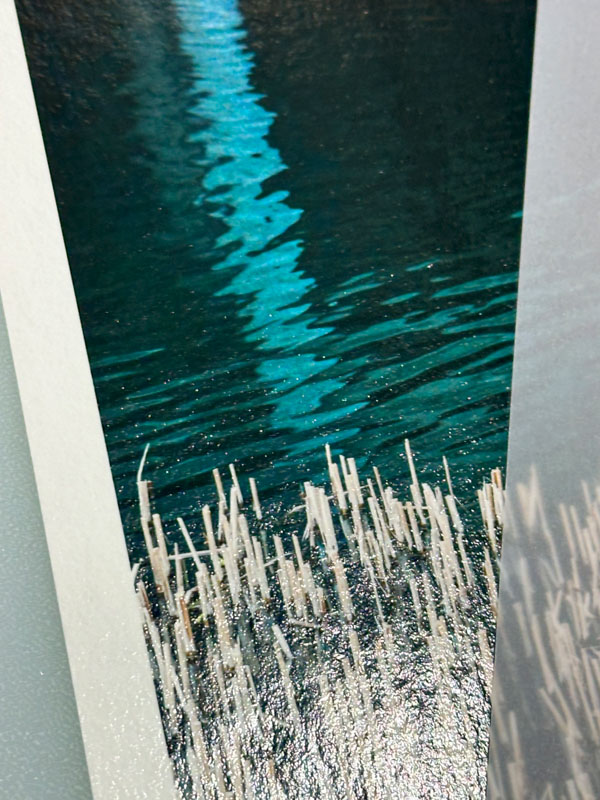
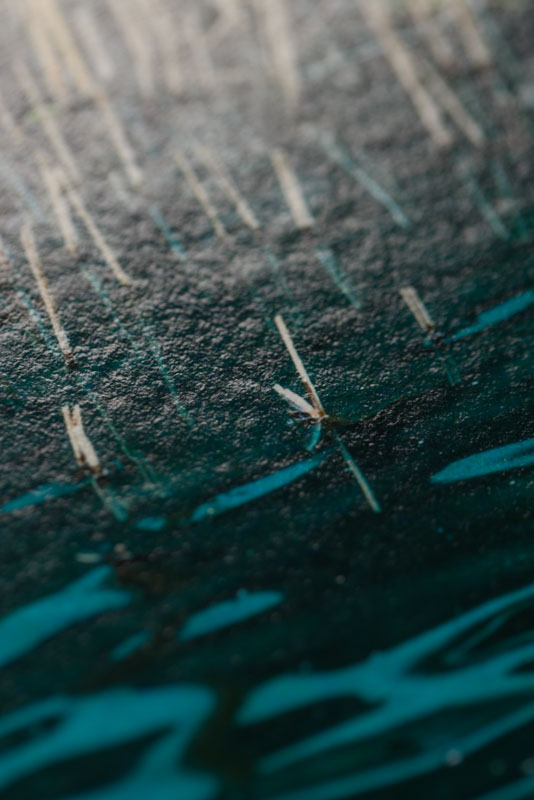

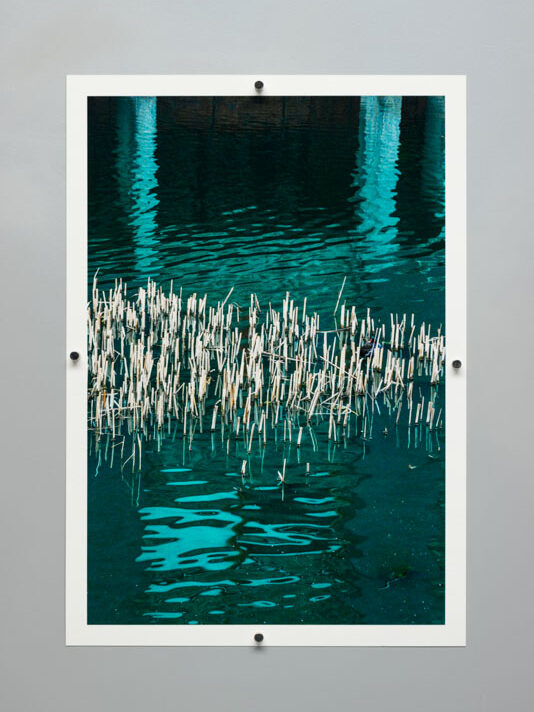
Wide-gamut colour print made on Hahnemühle Bamboo Gloss 305 gsm paper.
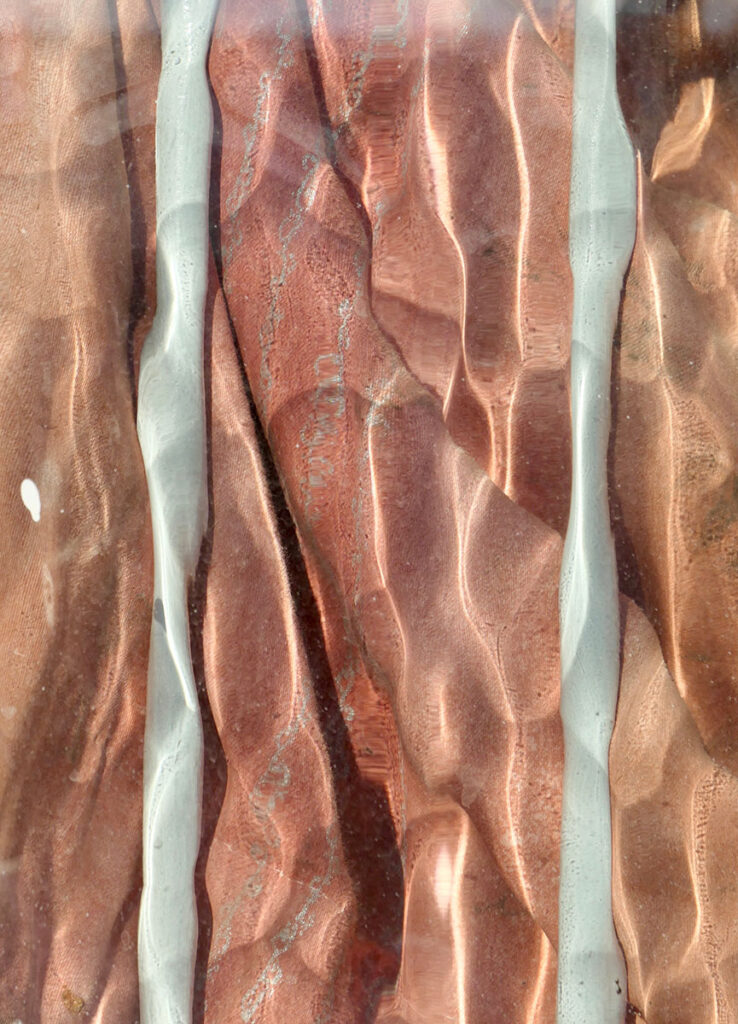
Wide-gamut colour print made on Hahnemühle Bamboo 290 gsm paper.
Hahnemühle Photo Silk Baryta X
The Photo Silk Baryta X has a lightly textured understated smooth sheen surface, a natural looking white tone and that reassuring baryta odour – it reminds me of a traditional darkroom paper. This baryta paper does not disappoint in that it delivers an impressive density, sharpness and takes advantage of the wide gamut available from our fine art printers.
The Hahnemühle Photo range is a great alternative to their FineArt papers, affording students, artists and photographers the opportunity to sequence and edit through images in print opposed to purely on screen – looking at a physical print is a very different experience to mediating images on screen. As a great allrounder, this paper lives up well to being handled and the flatness makes for a good poster print.
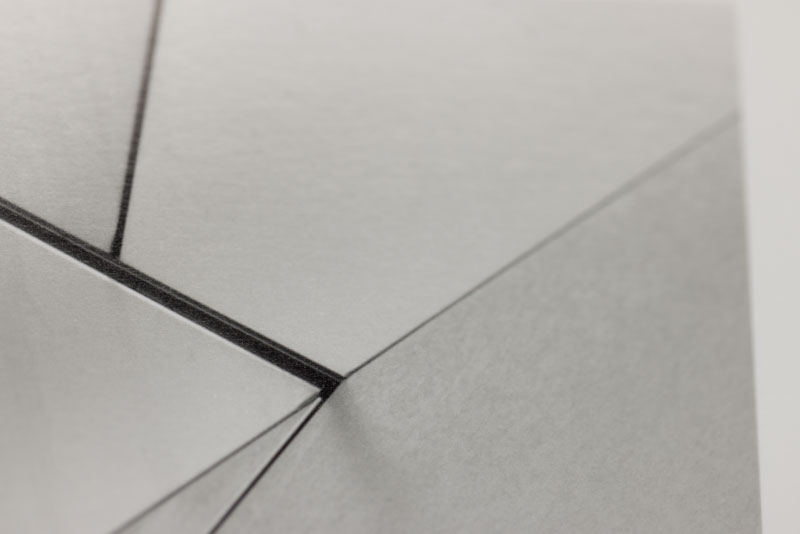
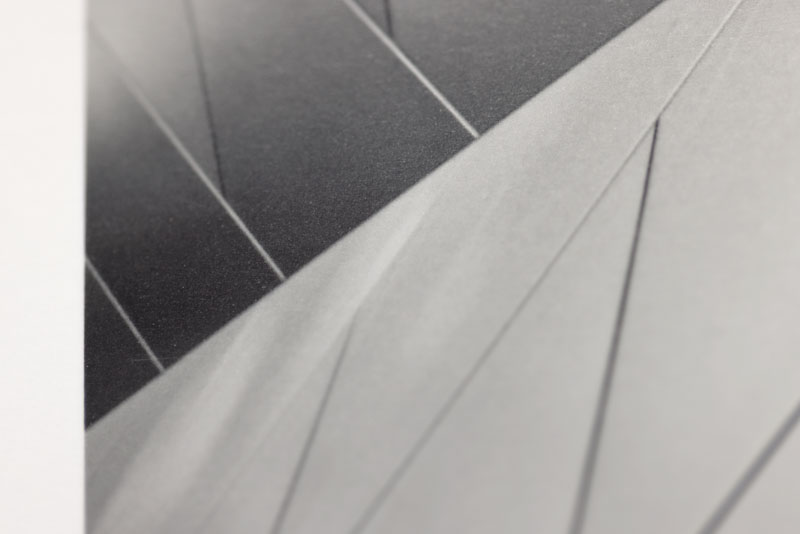
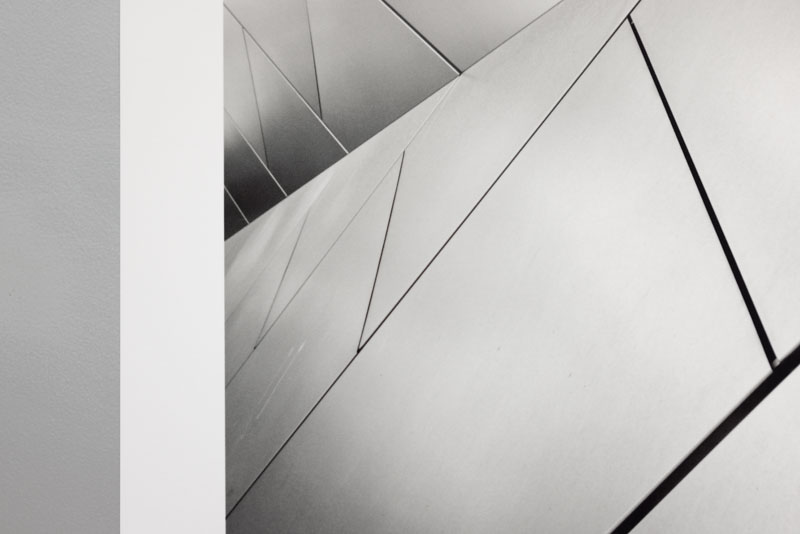

Piezography® Pro archival carbon pigment split-toned print on Hahnemühle Photo Silk Baryta X paper.
Want to try these papers? Want to try Piezography printing? Get in touch while we still have stock of the papers.